
A guest books your place for four nights. The nightly rate looks fine to you, but the guest sees a total that is 15% higher than what you actually charge, because Airbnb adds a service fee on top. You lose a small cut too. The platform keeps the guest's email, controls whether your listing shows up in search, and can change the rules next quarter without asking. This is the setup that has a growing number of short-term rental hosts asking a simple question: what would it take to send returning guests somewhere I control instead?
That question is the whole debate around direct booking vs Airbnb. It is not about deleting your listing. Airbnb is a demand engine, and for a brand-new property with no reputation, it fills nights you could not fill on your own. The switch most hosts actually make is quieter: keep the platform for discovery, and build a website of your own so repeat guests, referrals, and off-platform enquiries have a place to book without the middleman. Airbnb's own fee documentation confirms the cost of leaving that channel as your only channel, most hosts pay about a 3% service fee while guests pay a service fee ranging from 14.1% to 16.5% of the booking subtotal.
This guide covers the parts that actually matter:
- The real fee math, so you know what a direct booking is worth in dollars
- What a direct booking website needs to have (and what it does not)
- Why hosts leave Airbnb as their only channel, and why most keep it as a channel
- A step-by-step way to get a credible direct booking site live fast
- The tools that fit different kinds of hosts, from one property to twenty
By the end, you will know whether direct booking is worth it for your situation, and exactly how to set it up without hiring anyone or learning a channel manager you do not need.
What "Direct Booking" Actually Means for a Short-Term Rental
Direct booking means a guest reserves your property through a channel you own, usually your own website, instead of through an online travel agency (OTA) like Airbnb, Vrbo, or Booking.com. You keep the full nightly rate minus payment processing, you own the guest's contact details, and no algorithm decides whether your property is visible.
That is the whole idea, and it is worth separating from two things it is often confused with. Direct booking is not the same as running a full property management system. And it does not require you to leave Airbnb. Plenty of hosts run both, sending first-time guests through the OTA and repeat guests to their own site.
There is a spectrum of what "direct booking" can mean in practice:
- A one-page property website with photos, a description, house rules, and a contact or enquiry form. The guest reaches out, you confirm dates and take payment. Simple, cheap, live in a day.
- A property site with an embedded booking calendar and online payment, so guests self-serve without messaging you.
- A full direct booking engine wired to a channel manager that syncs calendars across Airbnb, Vrbo, and Booking.com so you never double-book.
Most solo hosts with one or two properties do not need the third option to start. A credible page that captures the enquiry is enough to begin recovering fee-free bookings from the guests who already know your place. The heavier setup makes sense once volume justifies it.
Why this matters for hosts specifically
A short-term rental is a business with real margins, and OTA fees come straight off the top of every reservation. For a host doing 150 booked nights a year, even a modest shift of repeat guests to a fee-free channel adds up to real money over a season. Direct booking also changes the relationship: you get the guest's email, which means you can invite them back next year, offer a returning-guest rate, or fill a last-minute gap with a quick message instead of hoping the algorithm surfaces you.
Without a site of your own, none of that is possible. A guest who loved their stay has no way to find you again except by searching the same OTA and paying the same fees. A referral from that guest lands on a platform full of competing listings. The demand you earned through a great stay leaks back into the pool.
The Real Fee Math: Direct Booking vs Airbnb
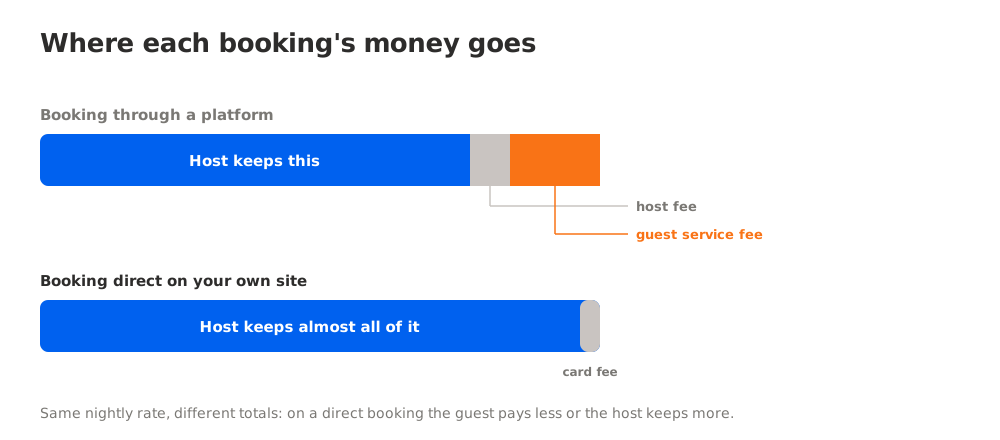
The honest answer to "how much does direct booking save" starts with Airbnb's published fees, not a marketing number. Under the split-fee model, most hosts pay about a 3% service fee while guests pay 14.1% to 16.5% of the booking subtotal. Under the host-only model, most hosts pay around 15.5% themselves and the guest sees no separate service fee. Either way, a meaningful slice of the transaction goes to the platform, and either the guest pays a higher total or the host absorbs the cost.
Here is what that looks like on a single booking, using round numbers for clarity.
| Scenario | Nightly rate | Nights | What guest pays (approx) | What host keeps (approx) |
|---|---|---|---|---|
| Airbnb, split-fee | $150 | 4 | $684 (with ~14% guest fee) | $582 (after ~3% host fee) |
| Airbnb, host-only fee | $150 | 4 | $600 | $507 (after ~15.5% host fee) |
| Direct booking | $150 | 4 | $600 (or less) | ~$583 (after ~3% card processing) |
The exact figures move with your market and fee model, and payment processing on a direct site is typically around 3%. The pattern is what matters: on a direct booking, either the guest pays less for the same stay, or you keep more of it, or both. Over a full year of repeat and referral bookings, that gap is the entire argument for having a direct booking website.
One caveat worth stating plainly: direct booking does not carry Airbnb's guest protections, resolution center, or built-in trust signals. You take on payment collection, a clear cancellation policy, and your own damage protection (a security deposit or a service like a damage waiver). For repeat guests who already trust you, that tradeoff is easy. For a first-time stranger, the OTA's protections are part of why the platform still earns its fee. This is exactly why most hosts keep Airbnb for discovery and use direct booking for the guests they already know.
Why Hosts Are Switching (and Why Most Keep Airbnb Too)
The reasons hosts leave Airbnb as their only channel come up again and again, and they are rarely just about fees.
- Fees on every booking, forever. The platform takes a cut of income you would keep on a direct booking, including from guests who found you by word of mouth and would have come straight to you.
- No ownership of the guest relationship. Airbnb sits between you and the guest. You cannot easily email past guests, run a returning-guest offer, or build a mailing list from the platform.
- Algorithm and policy risk. Your visibility depends on ranking factors you do not control, and the platform can change fees, rules, or your listing's standing at any time.
- Commoditization. On the platform, your property sits next to twenty similar listings. Your own website lets your place stand on its own, with your story, your photos, and your brand.
Now the honest other side, because pretending Airbnb has no value is how hosts lose money. The platform is a genuine discovery engine. It brings first-time guests who would never find a standalone property site. It handles payments, identity verification, reviews, and dispute resolution. For a new listing with no reputation and no audience, that reach is worth the fee.
So the smart move for most hosts is not "Airbnb vs direct booking" as an either-or. It is both, in sequence: let Airbnb bring the first-time guest, deliver a great stay, then give that guest an easy way to book direct next time. The question stops being "should I leave Airbnb" and becomes "why hosts leave Airbnb as their only channel," which almost no experienced host does. A direct booking website is the second channel that makes the first one worth more.
What a Direct Booking Website Actually Needs
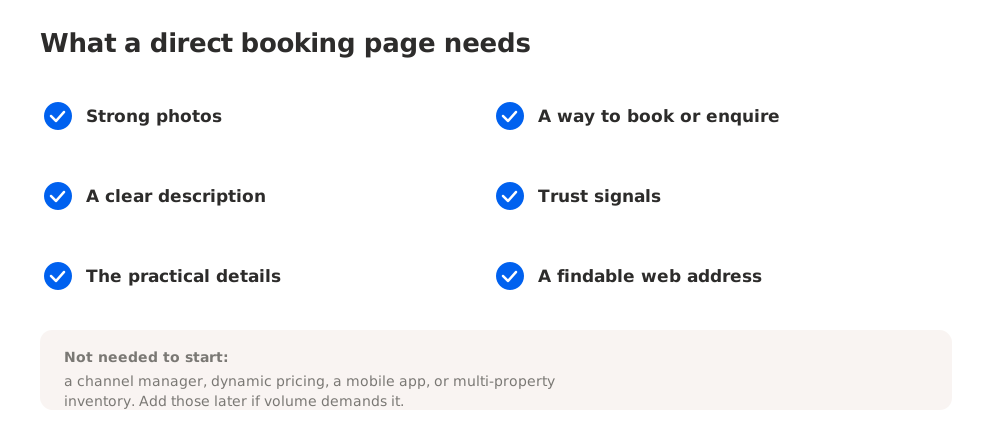
A direct booking site does not need to look like a booking megaportal. It needs to do a small number of things well enough that a guest trusts it and can act. Here is the real checklist.
- Strong photos. The single biggest driver of a booking decision. Use the same quality of images you would put on a listing, or better.
- A clear property description. What makes the place special, who it suits, what is nearby. Written in your voice, not copied listing boilerplate.
- The practical details. Location area, sleeping capacity, house rules, check-in and check-out, pets, parking, wifi. Guests decide on specifics.
- A way to book or enquire. At minimum, a contact form or a clear "check availability" button that reaches you. Ideally a calendar and payment, but capturing the enquiry is enough to start.
- Trust signals. A few guest quotes or a link to your reviews, your name and a real photo, a response promise. This is what replaces the OTA's built-in credibility.
- A findable web address. Something you can put on a welcome card, an Instagram bio, or a checkout email so guests can actually return to it.
What it does not need on day one: a channel manager, dynamic pricing software, a mobile app, or multi-property inventory management. Those are worth adding when you have the volume to justify them. Starting simple is how hosts actually get a page live instead of spending three months configuring software.
The fastest way to hit this checklist is a builder that generates the page from a few answers instead of making you design it. NiftySite was built for exactly this kind of one-page professional site: answer a handful of questions about the property, and it produces a clean page with your photos, a written description, and a contact or booking CTA, live in about 10 minutes. For a host who wants the credibility and the fee-free channel without a software project, that is the whole job done.
How to Set Up a Direct Booking Presence: Step by Step
Here is a concrete path from "I only have an Airbnb listing" to "guests can book me direct," designed for a solo host with one or two properties.
Step 1: Decide what "book direct" means for you
Start by choosing your booking mechanism, because it shapes everything else. If you are comfortable confirming dates and taking payment by message or invoice, a contact-and-confirm page is enough and gets you live today. If you want guests to self-serve, plan for an embedded calendar and online payment. Most hosts should start with contact-and-confirm and add automation later. Do not let the perfect booking engine delay having any direct channel at all.
Step 2: Gather your assets
Pull together 5 to 8 strong photos, your best property description, the practical details (capacity, location area, house rules, check-in process), and two or three guest quotes you can use. Having these ready is what makes the build fast. Common mistake: reusing tired listing text word for word. Rewrite it in a warmer, first-person-about-the-property voice, because this page is your brand, not a marketplace slot.
Step 3: Choose a tool that matches your volume
Match the tool to the size of your operation, not to the biggest feature list. A one or two property host wants speed and low cost. A host with a portfolio wants calendar sync across channels. Picking a heavy property management platform for a single cabin is the most common way hosts overspend and stall. For a single credible property page, a fast one-page builder like NiftySite fits; for multi-property booking automation, a dedicated short-term rental platform fits. The tools section below breaks this down.
Step 4: Build the page
With a fast builder, this is the 10-minute part. Answer the onboarding questions, add your photos, review the generated copy, and adjust anything that does not sound like you. Lead with the photos and a one-line hook about what makes the stay special. Put the booking or enquiry CTA above the fold and repeat it at the bottom. Keep it to one page. A short-term rental website converts better when a guest can see everything and act without hunting through a menu.
Step 5: Publish and get a real web address
Publish the page and note its address. On a free plan you will typically get a subdomain like yourplace.niftysite.co; upgrading unlocks a custom domain and gets the page indexed by Google. Either way, you now have a link that lives independently of any platform, which is the entire point of a direct booking website.
Step 6: Drive returning guests to it
The site only pays off if guests find it. Add the link to your Instagram bio, your checkout message, a welcome card or house manual in the property, and your email signature. When a past guest asks about coming back, send the direct link instead of pointing them to the OTA. This is how you get direct bookings: not by out-marketing Airbnb, but by capturing the demand you have already earned before it leaks back onto the platform.
Tools That Help: Matching the Builder to the Host
The right tool depends almost entirely on how many properties you run and whether you need automated booking. Here is an honest breakdown.
| Tool | Best For | Starting Price | Setup Time |
|---|---|---|---|
| NiftySite | One credible property page, fast | Free / $15 per month | About 10 minutes |
| Lodgify | Multi-property booking engine + channel manager | Paid monthly, higher tier | Hours to days |
| Hostfully | Portfolio hosts wanting a booking site + PMS features | Paid monthly, higher tier | Hours to days |
| Squarespace | Design-led custom site, willing to configure | Paid monthly | Several hours |
| Carrd | Bare one-page site, DIY design, lowest cost | Low annual price | 30 to 60 minutes |
For a solo host who wants a professional, findable property page without learning software, NiftySite is the fit. It generates the copy from your answers, publishes a clean one-page short-term rental website with your photos and a booking or contact CTA, and runs at $15 per month with monthly billing and no annual lock-in. There is a free tier to publish and try it first. It does not replace a channel manager, and it does not try to. It gives you the credible direct channel in the time it takes to make coffee.
For hosts running several properties who need synced calendars and an embedded booking engine across multiple OTAs, a dedicated short-term rental platform like Lodgify or Hostfully earns its higher price. Those tools handle the operational complexity that a single-property host does not have yet. Squarespace sits in between: capable and design-flexible, but you write your own copy and spend real time configuring it. Carrd is the budget one-page option, but you design it yourself with no niche templates and no AI copy.
If you want a deeper side-by-side of these builders with pros, cons, and pricing, the companion piece on the best website builders for Airbnb hosts breaks each one down in detail.
Best Practices and Common Mistakes
A few habits separate a direct booking site that earns fee-free bookings from one that just exists.
- Lead with photos and a hook. Guests decide fast. Put your strongest image and a one-line reason to stay at the very top.
- Make the booking action obvious. One clear CTA above the fold and again at the bottom. Do not bury "check availability" in a menu.
- Put the link everywhere guests already are. Instagram bio, checkout message, in-property welcome card, email signature. A direct booking website only works if guests can find it.
- Keep Airbnb running. Use it for first-time discovery. Direct booking is the second channel, not a replacement on day one.
- Write in your own voice. This page is your brand. Rewrite listing boilerplate so it sounds like a real host, not a marketplace.
The mistakes that cost hosts the most:
- Over-buying software. Configuring a full channel manager for a single property is the fastest way to stall out and never publish. Start simple.
- Waiting for the perfect booking engine. A contact-and-confirm page live today beats a self-serve calendar that launches in three months. Capture the enquiry now.
- Skipping trust signals. Without the OTA's badge system, your own reviews, photo, and response promise are what earn the booking. Do not leave them off.
- Forgetting the web address. A beautiful page nobody can return to is not a direct channel. Get a real link and share it relentlessly.
Frequently Asked Questions
Is direct booking worth it compared to Airbnb?
For repeat guests and referrals, yes. A direct booking keeps the OTA fee in your pocket or lowers the guest's total, and it gives you the guest's contact details so you can invite them back. For first-time strangers with no reason to trust you yet, Airbnb's discovery reach and built-in protections still earn their fee. The strongest setup is both: Airbnb for finding new guests, direct booking for keeping the ones you have.
How much do hosts actually save with direct booking?
It depends on Airbnb's fee model in your market. Under the split-fee model, guests pay roughly 14.1% to 16.5% on top of your rate while hosts pay about 3%; under the host-only model, hosts pay around 15.5% themselves. On a direct booking you pay only payment processing, typically around 3%. So the saving is either a lower total for the guest, more kept by the host, or a split of both, on every reservation that moves off-platform.
Do I have to leave Airbnb to take direct bookings?
No, and most hosts should not. Direct booking runs alongside your listing. You keep Airbnb as a discovery channel for new guests and send repeat guests and referrals to your own site. Leaving the platform entirely only makes sense once your direct channel reliably fills your calendar, which takes time to build.
What does a direct booking website need to have?
Strong photos, a clear property description, the practical details (capacity, location area, house rules, check-in), a way to book or enquire, a few trust signals like guest quotes and your name and photo, and a real web address you can share. It does not need a channel manager or dynamic pricing to start. Capturing the enquiry is enough to begin taking fee-free bookings.
How do I get direct bookings if guests only know me from Airbnb?
Capture them at the point where they already trust you. Add your direct link to your in-property welcome card or house manual, your checkout message, your Instagram bio, and your email signature. When a past guest asks about returning, send the direct link instead of pointing them back to the listing. You are not out-marketing Airbnb; you are recovering the demand you already earned.
What is the cheapest way to get a direct booking site live?
The lowest-cost real option is a one-page builder. NiftySite has a free tier to publish a page and Pro at $15 per month with monthly billing. Carrd is cheaper on an annual basis but you design everything yourself with no templates or AI copy. A full property management platform costs more and is only worth it once you run multiple properties.
How long does it take to build a direct booking page?
With a fast one-page builder, about 10 minutes, because the tool generates the copy from your answers and you just add photos and adjust. A design-led builder like Squarespace takes several hours because you build and write it yourself. A full booking platform with channel sync can take hours to days to configure properly.
Is a direct booking website safe without Airbnb's protections?
It requires you to handle a few things the platform used to cover: payment collection, a clear cancellation policy, and damage protection through a security deposit or a damage-waiver service. For repeat guests who already trust you, this is low risk. For unknown first-time guests, the OTA's built-in protections are part of why hosts keep the platform for discovery.
Do I need a channel manager for direct booking?
Not to start, and not at all if you run one or two properties. A channel manager syncs calendars across multiple OTAs so you never double-book, which matters at portfolio scale. A single-property host taking a handful of direct bookings a season can manage the calendar manually and add automation later if volume grows.
Can I get direct bookings without technical skills?
Yes. A builder like NiftySite is designed for hosts with no technical background: you answer a few questions, add photos, and publish. There is no code, no hosting setup, and no software to configure. The credible page and the fee-free channel come without any of the technical work a full booking platform would demand.
The Bottom Line on Direct Booking vs Airbnb
The direct booking vs Airbnb decision is not really a decision between two options. It is a decision to add a second channel you control on top of the first one that finds you guests. Airbnb earns its fee bringing first-time strangers who would never find a standalone site. A direct booking website earns its keep the moment a repeat guest or a referral books without the platform taking a cut, and it hands you the guest relationship the OTA otherwise owns.
Three takeaways to hold onto:
- Keep Airbnb for discovery, use direct booking for the guests who already trust you. That is what most experienced hosts actually do.
- The fee saving is real and recurring. Every off-platform booking is money kept or a lower guest total, on every reservation, every season.
- Start simple. A credible one-page site with photos, details, and a booking or enquiry CTA beats a half-configured booking platform you never finish.
If you are ready to get a credible property page live and start recovering fee-free bookings, NiftySite has a free forever plan with no credit card required, and Pro is $15 per month with no annual lock-in. You do not need software skills or a channel manager to own your own booking channel. You need one good page and a link you share everywhere your guests already are.
Last updated: June 2026. Airbnb fee figures are drawn from Airbnb's published service fee documentation and may vary by market and fee model.

Own your bookings, not just your listing
Get a credible one-page property site live in about 10 minutes, with your photos, your description, and a direct booking CTA. No channel manager, no software project, no annual lock-in.
Build my property page freeFree forever plan, no credit card. Pro is $15/month, monthly billing, cancel anytime.